작은 벤치마크 만들기

이 챕터에서 배우는 것
- HellaSwag-tiny — 큰 벤치마크의 미니 변형으로 본 책 모델 능력 측정
- 도메인 probe — 본인 도메인에 맞춘 평가 30~50 문항 직접 만들기
- pass@k — 생성 5번 중 1번이라도 통과하는가
- LLM-as-judge — 자동 평가의 함정과 사용법
전제
Ch 16 perplexity 너머 의 5축 평가. PPL 만으로 안 된다는 명제.
1. 개념 — "벤치마크" 가 측정하는 것
PPL 은 언어 모델의 평균 손실. 벤치마크는 특정 능력.
| 벤치마크 | 측정 | 형식 |
|---|---|---|
| HellaSwag | 상식 추론 (다음 일 예측) | 4지선다 |
| MMLU | 일반 지식 | 4지선다 |
| HumanEval | 코드 생성 | 함수 작성 + 테스트 |
| TriviaQA | 사실 지식 | 짧은 답 |
| (본인 도메인) | 사용 케이스 | 자유 |
본 책 10M 동화 모델은 위 어떤 표준 벤치마크에도 의미 있는 점수 안 나옴 — 너무 작고 너무 좁아서. 그래서 우리는 미니 변형 + 도메인 probe 를 만든다.
2. 왜 필요한가 — PPL 의 보완
| 측정 | 무엇을 잡나 | 본 책 모델 |
|---|---|---|
| PPL | 평균 토큰 손실 | 11.6 (Ch 16) |
| HellaSwag-tiny | 상식 추론 | ? |
| 도메인 probe | "동화 잘 짓나" | ? |
| pass@k | 여러 시도 중 1개라도 | ? |
PPL 11.6 인 모델 두 개가 상식 추론에서 30점 vs 50점 차이 날 수 있음. 모델 선택·디버깅·튜닝 결정에서 이 차이가 결정적.
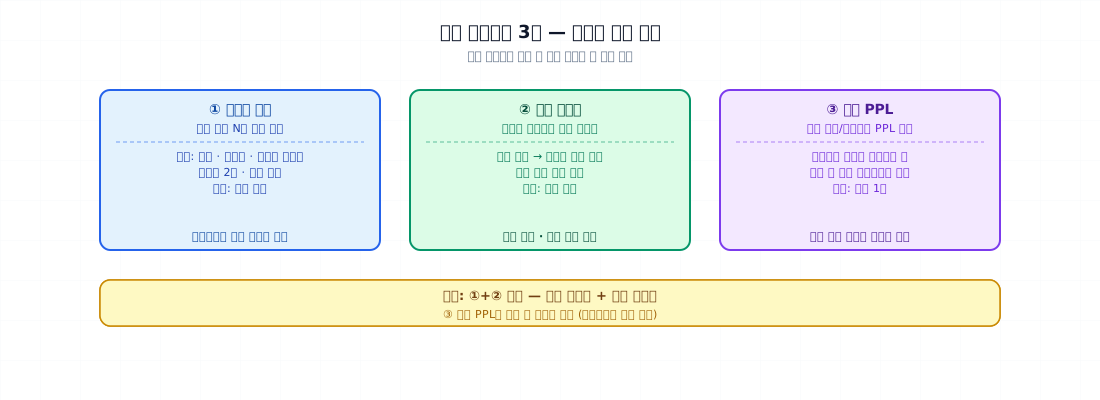
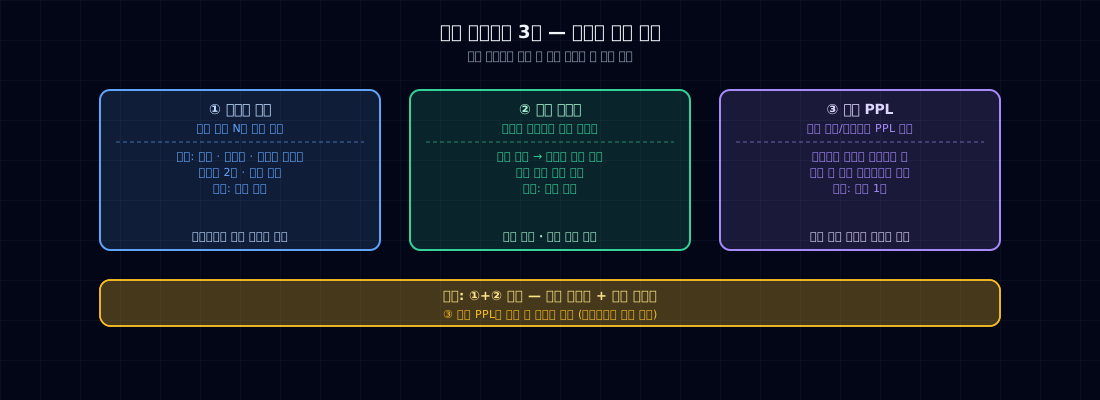
3. 어디에 쓰이나 — 3가지 도구
도구 1. Likelihood-based 4지선다 (HellaSwag 스타일)
각 선택지의 PPL 을 계산해 가장 낮은 것을 모델 답으로. 생성 안 함 → 평가 빠름.
- shift 1 — language modeling 의 표준.
- logp 가장 큰 (=PPL 가장 낮은) 선택지가 모델 답.
도구 2. 도메인 probe — 본인이 직접 작성
본 책 동화 모델용 30 문항 예시:
평가:
def evaluate_probes(model, tok, probes, n=5):
    results = {"correct": 0, "total": len(probes), "by_type": {}}
    for p in probes:
        passes = 0
        for _ in range(n):                                             # pass@n
            out = generate(model, tok, p["prompt"], max_tokens=20)
            if check(out, p): passes += 1
        if passes > 0: results["correct"] += 1
        results["by_type"].setdefault(p["type"], [0, 0])
        results["by_type"][p["type"]][1] += 1
        if passes > 0: results["by_type"][p["type"]][0] += 1
    return results
도구 3. pass@k
코드 평가의 표준. 같은 문제에 k 번 시도 해 한 번이라도 통과하면 정답.
| pass_at_k.py | |
|---|---|
본 책 동화엔 코드 같은 정답이 없지만 "인명 자연스러움" "감정 합리성" 같은 probe 에서 비슷하게 활용.
4. 최소 예제 — HellaSwag-tiny 30 문항
진짜 HellaSwag 은 영어 일반 텍스트 학습 모델용. 본 책 동화 모델용 미니:
본 책 10M 동화 모델 예상 결과:
해석: - 무작위 추측: 25% - 65%: 학습 도메인 (TinyStories) 에서 상식 추론은 가능 - 진짜 HellaSwag (10K+ 문항, 일반 텍스트) 은 같은 모델이 30% 미만 — 도메인 외라.
5. 실전 — LLM-as-judge
probe 30개를 사람이 평가하면 30분. 100개·매주 측정하면 비효율. LLM 이 judge 로:
LLM judge 함정
1. Self-bias — 같은 회사 모델이 평가하면 후함. 가능하면 다른 모델군.
2. Position bias — A/B 비교에서 첫 번째에 후함. 항상 랜덤 swap.
3. Length bias — 긴 답에 후함. 길이 균형 검토.
4. Cost — Haiku 한 번 약 $0.0001. 100 샘플 = $0.01. Sonnet 은 10×.
5. Drift — 같은 모델 버전이라도 다른 시점에 다른 답. 재현용 판본 고정.
6. 자주 깨지는 포인트
1. 평가셋이 학습셋과 겹침 — 합성 데이터 만들 때 같은 인물·키워드 쓰면 hold-out 이 의미 없어짐. 시드 분리 + hash 검증.
2. 30개로 차이 측정 — 통계적 의미 부족. 95% 신뢰구간이 ±15% 정도. 100~500 권장.
3. greedy 만으로 pass@k — pass@k 의 핵심은 다양한 시도. temperature 0.7~1.0.
4. probe 만 만들고 카테고리 없음 — 어디가 약한지 진단 불가. type 별로 분리 + 결과를 type 별 집계.
5. 학습 끝나고 한 번만 평가 — 학습 중간 (예: step 4K, 8K, 12K) 에서도 평가해 언제 saturate 되는지 보기.
6. judge 모델로 자기 모델 평가 — Claude 가 만든 합성 데이터로 학습한 모델을 Claude 가 평가. self-bias.
7. accuracy 만 보고 양적 평가 끝 — accuracy 65% 든 80% 든 모델 출력 직접 한 번 읽어야 함.
7. 운영 시 체크할 점
본 책 모델 평가 게이트:
- hold-out PPL (학습 분포 안)
- OOD PPL (학습 분포 밖) — 차이 측정
- HellaSwag-tiny 30~100 문항 — accuracy
- 도메인 probe 30~50 문항 — type 별 분리
- pass@5 — 다양성 검증
- 5축 사람 평가 50 샘플 (Ch 16)
- LLM-as-judge 100 샘플 (Haiku, position swap)
- 학습 중간 step 평가 — saturation 시점
8. 연습문제
- 본인 도메인용 probe 30개를 직접 작성하라. 5개 카테고리 × 6 prompt. expected output 도 같이.
- 본 책 10M 모델로 HellaSwag-tiny 30 문항을 돌려 accuracy 측정. 무작위 25% 대비 얼마나 위?
- 도메인 probe 에서
n=1(greedy) vsn=5(pass@5) 의 통과율 차이는? - LLM judge (Haiku) 와 본인 평가의 상관계수 (50 샘플) 를 측정. r > 0.7 이면 judge 신뢰 가능.
- (생각해볼 것) "정답이 1개" 인 probe vs "여러 답이 가능" 한 probe — 본인 도메인에 어느 쪽이 많은가? pass@k 가 의미 있는 도메인은?
원전
- Zellers et al. (2019). HellaSwag. arXiv:1905.07830
- Hendrycks et al. (2020). MMLU. arXiv:2009.03300
- Chen et al. (2021). Codex / HumanEval. arXiv:2107.03374 — pass@k
- Zheng et al. (2023). Judging LLM-as-a-Judge with MT-Bench. arXiv:2306.05685
- Anthropic. Building evaluations (블로그)