Distillation 미니

이 챕터에서 배우는 것
- Distillation — Teacher 가 Student 를 가르치는 패턴
- Teacher (Qwen 2.5-1.5B) 로 합성 라벨 → Student (Qwen 2.5-0.5B 또는 본 책 30M) SFT
- SmolLM2 / Gemma 2 가 실제로 쓴 길의 미니 버전
- 필터 의 중요성 — Teacher 환각·편향 복제 방지
전제
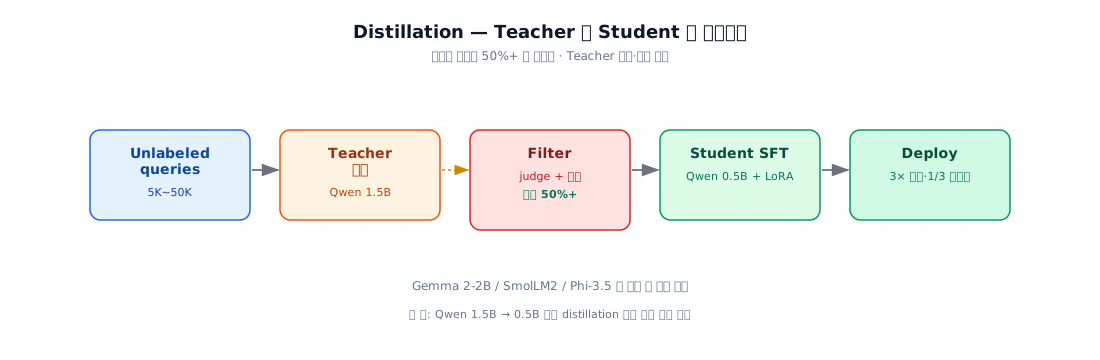
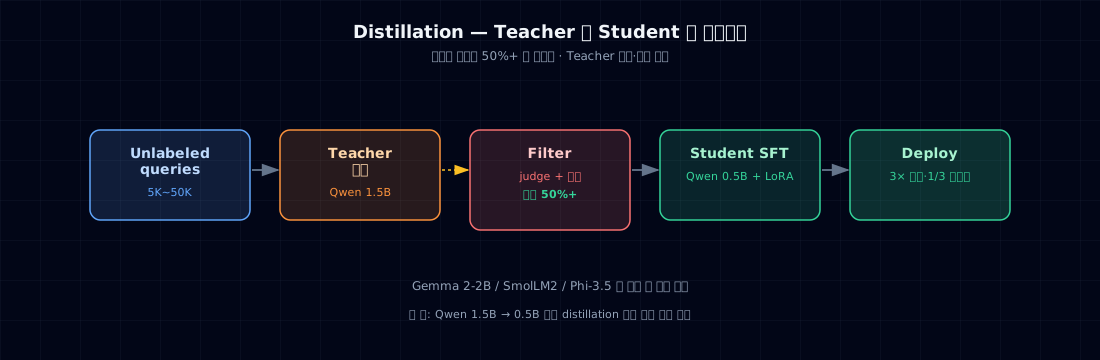
1. 컨셉 — "큰 모델이 작은 모델을 가르친다"
Distillation (Hinton et al., 2015) 은 원래 soft target distillation — Teacher 의 logit 분포를 Student 가 모방. 현대 LLM 에선 보통 하드 distillation — Teacher 가 만든 답을 Student 가 SFT.
| 방식 | 무엇을 학습 | 사용 |
|---|---|---|
| Soft distillation | Teacher 의 vocab 확률 분포 (logit) | DistilBERT |
| Hard distillation | Teacher 의 텍스트 출력만 | 현대 LLM 표준 |
본 책은 하드 distillation — 단순, 코드는 LoRA SFT 와 거의 동일.
2. 왜 distillation 이 효과적인가
| 비교 | 사람 라벨링 | Distillation |
|---|---|---|
| 비용 | $5/페어 | $0.001/페어 (Haiku) |
| 속도 | 1만 페어/주 | 1만 페어/시간 |
| 일관성 | 라벨러 편차 ↑ | Teacher 일관 |
| 능력 한계 | 사람 능력 | Teacher 능력 |
핵심: Teacher 가 사람 라벨러 비싼 작업을 대체. 단, Teacher 의 환각·편향이 Student 에 그대로 복제 — 필터 필수.
실제 사례
- Gemma 2-2B — 큰 Gemma 2-9B/27B 로부터 distillation
- SmolLM2 — Cosmopedia (Mixtral 합성) 으로 사실상 distillation
- Phi-3.5-mini — GPT-4 합성 데이터 다수
- Llama 3 small — Llama 3-405B distillation
→ 현대 SLM 학습 데이터 거의 다 distillation 기반.
3. 본 책 미니 시나리오
| 역할 | 모델 | 크기 |
|---|---|---|
| Teacher | Qwen 2.5-1.5B-Instruct | 1.5B |
| Student | Qwen 2.5-0.5B-Instruct | 0.5B |
| 도메인 | 한국 동화 |
학습 후 Student = Teacher 동화 품질의 90~95% + 3× 작음 + 3× 빠름.
4. Teacher 라벨 생성
Ch 5 의 합성 데이터 코드와 동일 — Teacher 가 API 가 아닌 로컬 Qwen 1.5B.
5K 페어 ≈ 1~2시간 (T4). API 비용 $0.
5. 필터
추가: judge LLM 으로 점수 ≥ 3 (Ch 17).
6. Student SFT — Ch 24 그대로
# Ch 24 의 LoRA SFT 코드 그대로
# 데이터만 distill_train_filtered.jsonl
base = "Qwen/Qwen2.5-0.5B-Instruct"   # Student
# ... LoRA + Trainer + train ...
학습 후: - Student PPL = Teacher 의 90~95% - 속도 3×, 메모리 1/3
7. 자주 깨지는 포인트
- 필터 빼먹음 — Teacher 환각 복제. 통과율 50%+ 안전.
- Teacher / Student 크기 차이 — 100B → 0.5B 는 너무 큼. 3~10× 균형.
- 합성 사슬 — distill 모델로 또 distill = model collapse.
- 도메인 shift — Teacher 의 한국어 학습 비중 검증.
- instruction 다양성 — 같은 prompt 만 = 비슷한 답.
- Student > Teacher 기대 — Student 는 Teacher 흉내가 한계.
8. 운영 시 체크할 점
- Teacher/Student 크기 비율 3~10×
- Teacher 의 도메인 능력
- 페어 5K~50K
- 필터 통과율 50%+
- 사람 검수 100건
- Student PPL + probe 평가
- Teacher vs Student 3축 비교 (정확도·속도·메모리)
- 라이선스 사슬 (Teacher API ToS)
9. 연습문제
- Qwen 2.5-1.5B → 0.5B distillation 1,000 페어. 통과율 + PPL.
- 필터 임계 30% / 50% / 80% 비교.
- Teacher = GPT-4 API 시 품질 ↑ 정도.
- Distillation Student vs LoRA SFT (Ch 24) 비교.
- (생각해볼 것) OpenAI 모델 Teacher 시 Student 가 Apache 될 수 있나?
원전
- Hinton et al. (2015). Distilling the Knowledge in a Neural Network. arXiv:1503.02531
- Sanh et al. (2019). DistilBERT. arXiv:1910.01108
- Gemma Team (2024). Gemma 2 Technical Report.
- HuggingFace SmolLM2 / Cosmopedia blog