LoRA · QLoRA 입문

이 챕터에서 배우는 것
- LoRA 의 핵심 식 — 한 페이지로 왜 작동하는지
- HuggingFace
peft30줄 — Qwen 2.5-0.5B-Instruct 에 LoRA SFT - QLoRA — 4bit 베이스 위에 LoRA.
bitsandbytes한 줄 차이. - 안전한 기본값: r=16, alpha=32, target=q,v,k,o, lr=1e-4
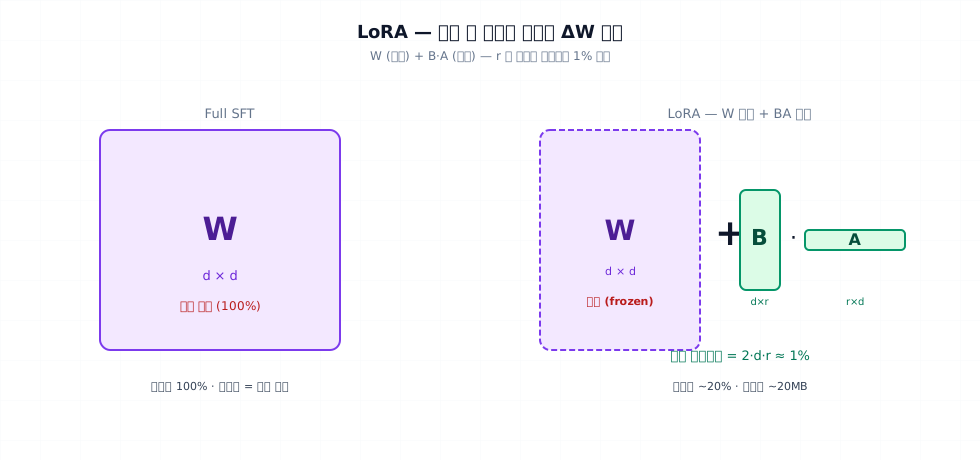
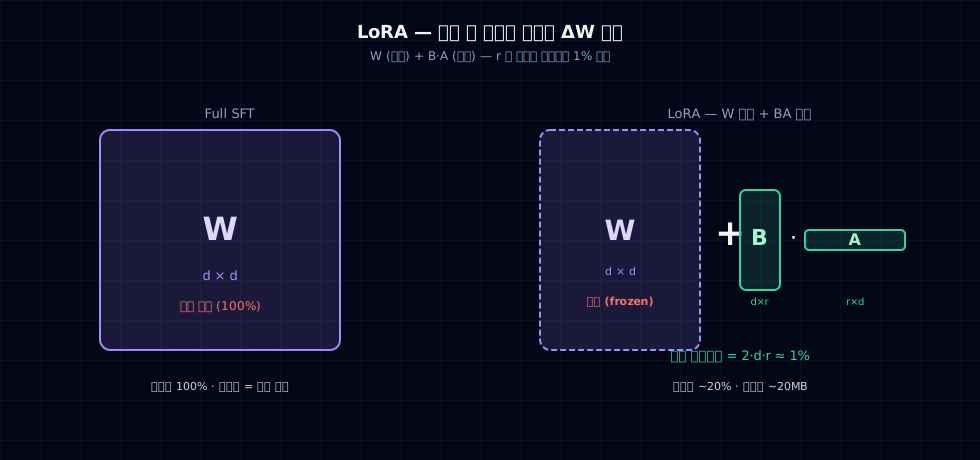
1. 컨셉 — Low-Rank 가 충분한 이유
LoRA (Hu et al., 2021) 의 핵심 가설:
"파인튜닝 시의 가중치 변화 ΔW 는 low-rank 행렬 로 잘 근사된다."
표준 가중치 갱신:
LoRA 의 가정:
즉 ΔW 를 두 작은 행렬의 곱 으로 분해. r 이 작으면 (예: 8, 16) 학습 파라미터가 W 의 0.1~1%.
| 베이스 W | 표준 SFT 학습 | LoRA r=16 |
|---|---|---|
| 1B | 1B | 2~4M |
| 7B | 7B | 10~30M |
왜 작동하나: 사전학습 모델의 가중치가 이미 풍부 — 도메인 특화 변화는 저차원 으로 충분. 경험적·이론적 증거 다수.
2. 왜 사용하나
| 측면 | LoRA | Full SFT |
|---|---|---|
| 메모리 | 1/5 ~ 1/10 | 100% |
| 학습 시간 | 1/2 | 1× |
| 어댑터 크기 | 10~100 MB | 1~14 GB |
| 도메인 적응 | 거의 동등 | 약간 우위 |
| 베이스 라이선스 영향 | 분리 가능 | 종속 |
어댑터 분리 가 큰 장점 — 베이스 (Apache 2.0) + 본인 어댑터 (본인 라이선스) 같이 가능.
3. peft 30줄 LoRA SFT
- r=16, alpha=32 — Hu et al. 권장 + Qwen LoRA 가이드 표준. alpha/r = 2:1.
get_peft_model— 베이스 가중치 동결, 어댑터만 학습 가능 상태로.- chat template — Qwen 2.5 형식.
<|im_start|>user...<|im_end|>자동. - 어댑터만 저장 — 약 20MB (베이스 1GB 와 비교).
4. QLoRA — 4bit 베이스로 메모리 1/4
한 줄 차이: quantization_config 추가. 베이스가 4bit 로 메모리 1/4.
| 베이스 | LoRA 메모리 | QLoRA 메모리 |
|---|---|---|
| 0.5B | 2.5 GB | 1 GB |
| 1.5B | 6 GB | 2 GB |
| 7B | 25 GB | 8 GB ← T4 가능 |
| 13B | 45 GB | 14 GB ← T4 가능 |
→ T4 + QLoRA 로 7B/13B 까지 학습 가능. QLoRA 이전엔 단일 A100 필수였음.
5. Hyperparameter 표준값
| 항목 | 값 | 비고 |
|---|---|---|
r |
8 / 16 / 32 | 16 시작. 데이터 ↑ 면 32. |
lora_alpha |
16 / 32 / 64 | 보통 r 의 2배 |
lora_dropout |
0.05 / 0.1 | 데이터 작으면 0.1 |
target_modules |
q_proj, v_proj 만 (최소) ~ all linear (최대) |
q,k,v,o 가 균형 |
lr |
1e-4 ~ 5e-4 | 베이스 lr 보다 ↑ (어댑터만 학습) |
epochs |
1~5 | 데이터 1만↓ = 3, 1만↑ = 1 |
warmup |
5~10% | 표준 |
r 선택의 직관
- r=4: 매우 가벼움. 단순 도메인 변환 (예: 톤 조정).
- r=16: 표준. 일반 도메인 SFT.
- r=64+: 큰 변화. continued pre-training 흉내.
target_modules 선택
| 옵션 | 학습 파라미터 | 효과 |
|---|---|---|
q_proj, v_proj |
0.5% | LoRA 논문 표준, 가벼움 |
q_proj, k_proj, v_proj, o_proj |
1.0% | 권장 |
| all linear (FFN 포함) | 2~3% | 최대 효과, 느림 |
6. 학습 후 — 어댑터 합치기 vs 분리 유지
| merge_or_keep.py | |
|---|---|
| 방식 | 장점 | 단점 |
|---|---|---|
| 분리 | 어댑터만 swap, 디스크 ↓ | 추론 시 LoRA 적용 오버헤드 미세 |
| 합치기 | 표준 모델, GGUF 변환 쉬움 | 어댑터 swap 불가, 베이스 크기 |
캡스톤: 합쳐서 GGUF 변환 (Ch 20).
7. 자주 깨지는 포인트
1. r 너무 크게 — r=128+ 는 어댑터가 sub-model 처럼 됨. overfit + 메모리. 16 시작.
2. target_modules 빠뜨림 — q_proj 만 하면 attention 만 변함, FFN 학습 못 함. q,k,v,o 가 균형.
3. lr 너무 작음 — 베이스 lr 6e-4 그대로 쓰면 학습 안 됨. LoRA lr = 1e-4 이상.
4. chat template 누락 — instruction 페어를 plain text 로 학습 → 형식 깨짐. apply_chat_template 필수.
5. eos 토큰 누락 — assistant 답변 끝에 EOS 없으면 학습이 끝없이 이어 씀. tokenizer 가 자동 처리하지만 verify.
6. QLoRA + grad accumulation 시 dtype 충돌 — bnb_4bit_compute_dtype 와 args.bf16 일치 확인.
7. 어댑터 적용 후 평가 빼먹음 — LoRA 가 학습됐는지는 평가셋에서만 확인. 학습 전·후 PPL 비교.
8. epoch 너무 많음 — 데이터 작은데 5+ epoch = overfit. 보통 1~3 시작.
8. 운영 시 체크할 점
LoRA 학습 게이트:
- 베이스 모델 결정 (Ch 22)
- r / alpha / target_modules / lr 표준값 확인
- 데이터 페어 형식 + chat template
-
print_trainable_parameters로 0.5~3% 확인 - 학습 전 PPL (베이스) 측정
- 학습 (1~3 epoch)
- 학습 후 PPL + 샘플 비교
- 어댑터 분리 vs 합치기 결정
- (다음) Ch 22 의 모델 카드 7항목 갱신
9. 연습문제
- SmolLM2-135M 에 100 페어 LoRA. 학습 전·후 PPL 차이는?
- r=4 / 16 / 64 로 같은 데이터 학습. 학습 손실 + 시간 + 어댑터 크기 비교.
target_modules=["q_proj","v_proj"]vs["q_proj","k_proj","v_proj","o_proj"]비교.- QLoRA (nf4) 와 일반 LoRA (bf16) 의 학습 속도 + 최종 손실 차이.
- (생각해볼 것) "low-rank 가 충분하다" 는 가설이 깨지는 도메인은? r=64 도 부족한 작업이 있을까?
원전
- Hu et al. (2021). LoRA: Low-Rank Adaptation of Large Language Models. arXiv:2106.09685
- Dettmers et al. (2023). QLoRA: Efficient Finetuning of Quantized LLMs. arXiv:2305.14314
- HuggingFace
peftdocs —LoraConfig표준값 - HuggingFace
bitsandbytes— NF4 양자화